Shower Replacement in Maryland
When the base flexes, the grout keeps failing, or the door leaks no matter what you do, it’s time to replace the shower — not patch it. We take out the old unit and install a grout-free acrylic system built to last.
When a Shower Is Past Repair
A worn shower is more than an eyesore. A cracked fiberglass base or a failing tile pan lets water into the wall and floor, where it quietly damages framing and subfloor for years before you see a stain. The fix is to remove the whole unit, deal with whatever is behind it, and install a system with no grout lines to fail.
One continuous seal
The acrylic base and wall panels are custom-measured and pre-fitted, so there are no grout lines and no field-built seams for water to get through.
New enclosure & fixtures
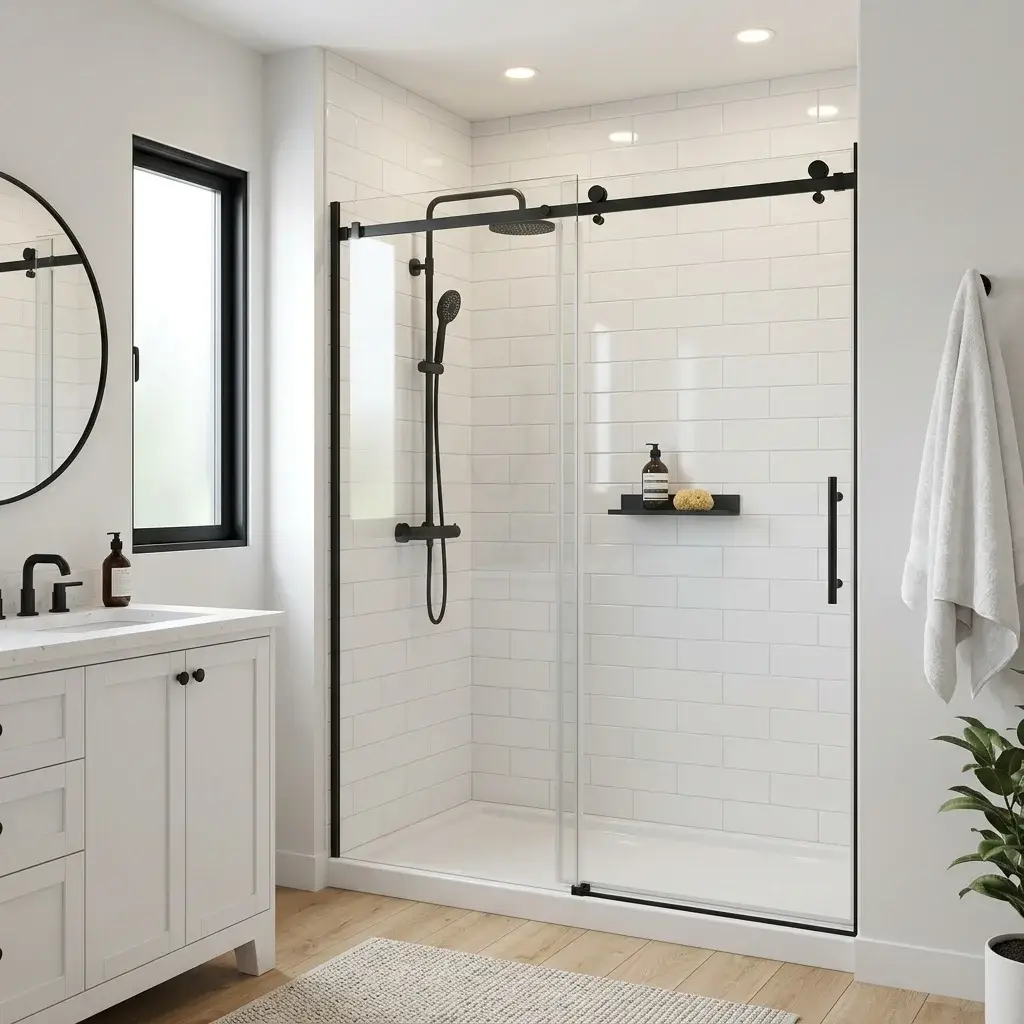
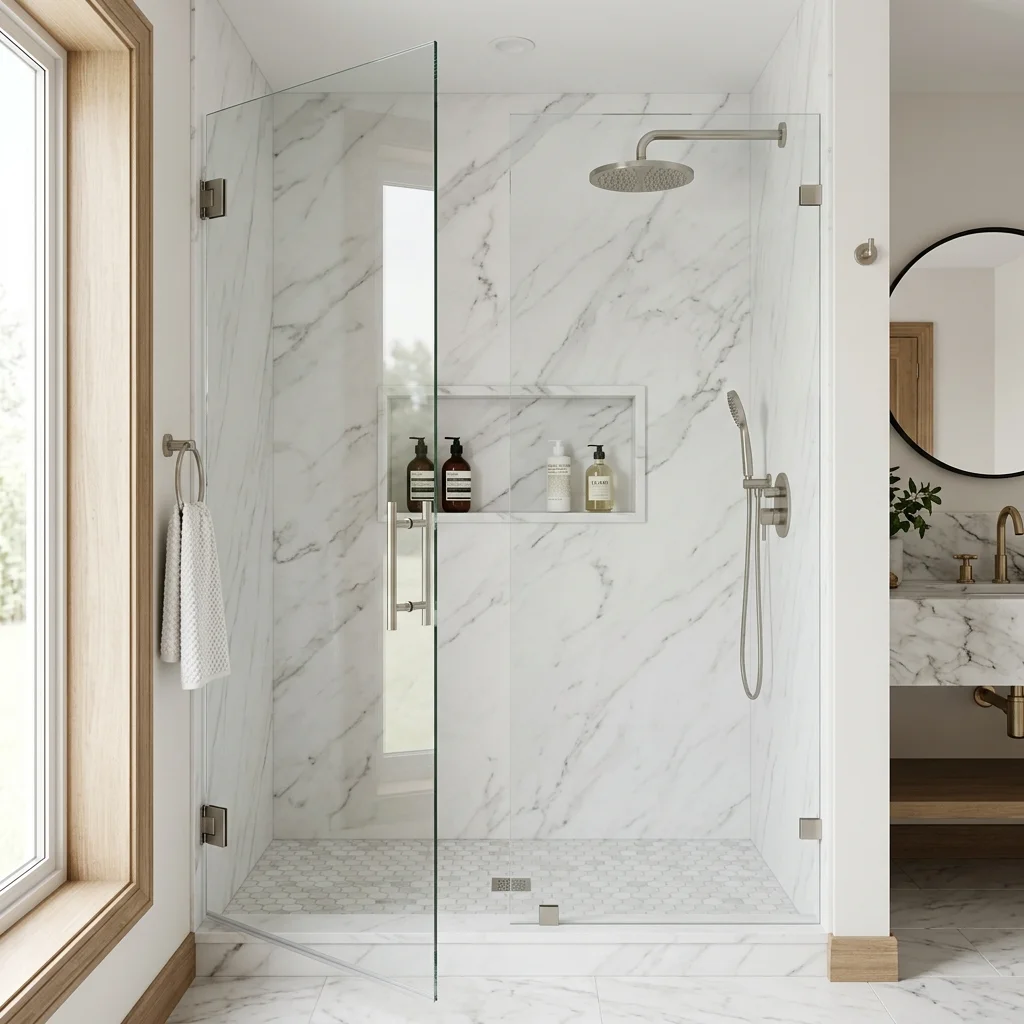
A new framed or frameless glass door, a rain head or hand-held wand, recessed niches, and hardware in the finish you choose.
Non-porous surface
Wipes clean with mild soap and water. No grout to scrub, no re-sealing, no yellowing.
Lower threshold, optional
While the shower is out, we can drop the entry to a low or curbless threshold and add a bench and grab bars. See our walk-in showers page.
Replace vs. Reglaze
Reglazing sprays a coating over the surface you already have. It looks better for a year or two, then the coating wears at the drain and the corners and starts to peel — and the cracked base or failed pan underneath is still there, still leaking. A full replacement costs more up front and solves the actual problem once.
New Shower Materials Compared: Acrylic, Tile and Fiberglass
Once the old stall or pan comes out, the replacement is finished in one of three materials. This is how they hold up over the life of the shower.
| Factor | Grout-free acrylic | Ceramic / porcelain tile | New fiberglass (FRP) unit |
|---|---|---|---|
| Seams & grout | Pre-fitted panels, no field grout | Many feet of cement grout to seal and maintain | One-piece, but a thin gel-coat surface |
| Water resistance | Non-porous; water cannot soak in | Grout and substrate absorb moisture over time | Water-resistant until the gel coat cracks or wears |
| Cleaning | Wipe with mild soap and water | Scrub grout; re-seal periodically | Wipe only; abrasives dull the finish |
| Common failure point | Rare; a damaged panel is swapped | Grout cracks, tiles loosen, pan leaks | Base flexes, surface yellows, hairline cracks |
| Typical service life | Longest of the three | Long if diligently maintained | 10 to 15 years for builder-grade units |
We install the grout-free acrylic system in column one. Tile and fiberglass are listed for comparison.
Shower Replacement FAQs
Should I reglaze my old shower or replace it?
Reglazing or refinishing is a cosmetic coating over the existing surface. It hides stains for a while but does nothing about a cracked base, a leaking pan, or moisture behind failed grout — and the coating itself wears and peels in a few years. Replacing the shower removes the cause, not just the appearance.
How long does a fiberglass shower stall last?
Most builder-grade fiberglass and acrylic stalls hold up 10 to 15 years. After that the surface yellows and gets chalky, the base flexes underfoot, the door track corrodes, and hairline cracks start letting water into the wall. Once the base is flexing it is time to replace it.
Can you replace just the shower base or pan?
Sometimes, if the walls are sound and the pan is the only failure. More often the pan leaks because the whole unit has aged, so replacing the base and the surround together gives you a single continuous seal. We tell you which makes sense after inspecting it at the free consultation.
Will a new shower fit the same space as my old one?
Yes. We custom-measure the opening and pre-fit the acrylic base and wall panels to your exact dimensions, so the new shower fits the existing footprint. If you want to make it larger — for example by taking in an adjacent unused tub — we can do that in the same project.
What do you find behind a leaking shower?
Usually softened drywall or backer board, sometimes a rotted stud or subfloor at the base, and occasionally mold. We open it up, dry it out, replace what is damaged, and install the new grout-free system so it cannot happen again. Any additional work is quoted and approved before we do it.
Shower Replacement Cost in Maryland
Every Maryland bathroom is different, so we don’t quote a price over the phone. You get an exact, locked-in figure at the free in-home consultation — and it stays valid for 12 months. What moves the number:
- The size of the shower and whether you keep the footprint or enlarge it
- What we find behind the old unit — damaged drywall, backer board, framing or subfloor
- Wall panel finish — smooth acrylic, tile-look or stone-look patterns
- Glass: a framed door, a semi-frameless or a frameless enclosure
- Fixtures, hardware, recessed niches and any threshold change
0% interest financing options are available, and there are no hidden fees — the price we lock in is the price you pay. See financing options.
Cities We Serve for Shower Replacement
We’re based in Columbia and cover Central Maryland. See a local guide for your area:
Free In-Home Consultation
Step 1 of 3
Explore Our Related Bath Services
Discover how specialized pre-fit acrylic bath systems enhance comfort, safety, and home value across Maryland.