Shower Replacement vs. Tub-to-Shower Conversion: What's the Difference?
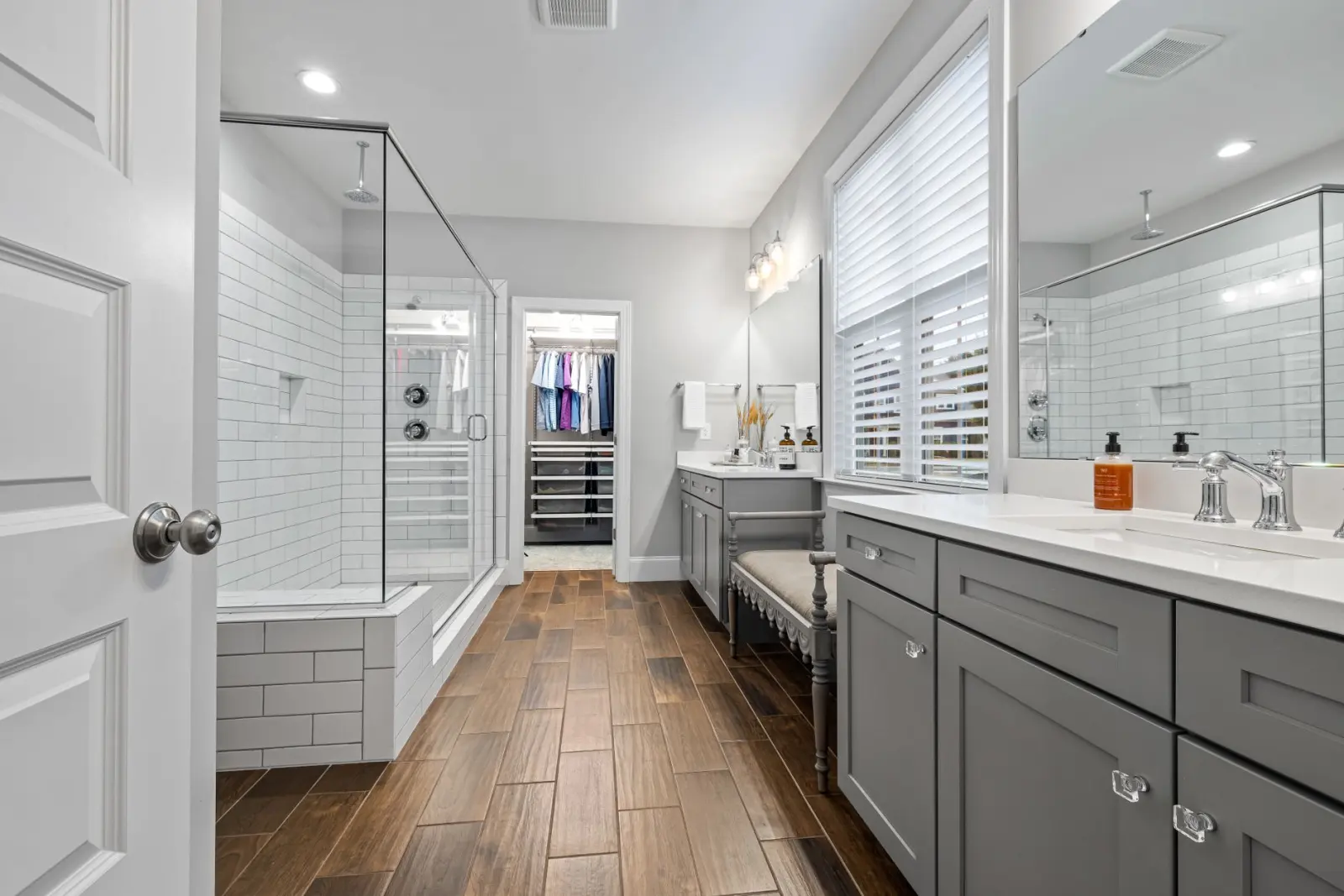
If you've started researching bathroom work online, you've probably noticed that "shower replacement" and "tub-to-shower conversion" get used almost interchangeably — even though they're two different projects with different scopes, different plumbing implications, and different price drivers. Picking the wrong search term isn't a big deal, but picking the wrong project for your actual bathroom can mean paying for work you didn't need, or missing a step that would have solved the real problem. Here's how to tell which one your bathroom actually calls for.
Shower Replacement: Swapping Out an Existing Shower
A shower replacement starts from a bathroom that already has a standalone shower — no tub involved. The old shower pan, walls, door, and fixtures come out, and new ones go in, generally in the same footprint. This is the right project when the shower itself is the problem: cracked or stained fiberglass, grout that won't come clean no matter how you scrub it, a door that leaks onto the floor, or fixtures that are simply worn out.
Because the drain location, plumbing lines, and rough opening usually stay put, a shower replacement tends to be a more contained project than a conversion. The work is mostly cosmetic and surface-level — new wall panels or tile, a new base, new glass or a new door — rather than a structural change to the room.
Tub-to-Shower Conversion: Changing What the Space Does
A tub-to-shower conversion is a different kind of project. You're starting with a bathtub — often one that's rarely used — and converting that footprint into a walk-in shower. That means removing the tub entirely, which usually involves relocating or modifying the drain, reworking the subfloor, and building a new threshold and enclosure where the tub used to sit.
This is the project homeowners choose when stepping over a tub wall has become inconvenient or risky, when a household has stopped using the tub altogether, or when the goal is simply a more open, modern-feeling bathroom. It's a bigger scope of work than a straight shower replacement, because you're changing what the plumbing and framing underneath the floor are set up to do.
How to Tell Which One You Need
- You already have a shower, no tub, and it's outdated, leaking, or moldy: that's a shower replacement.
- You have a tub you rarely or never use, and you want a shower in its place: that's a tub-to-shower conversion.
- You want to keep a tub but the one you have is old, chipped, or hard to get in and out of: that's closer to a bathtub replacement than either of the above.
- Getting in and out safely is the main concern, not the style of the fixture: look at a walk-in tub or a broader accessible bathroom approach instead of assuming you need a full conversion.
What Changes Behind the Wall
The visible difference between these projects is obvious — tub versus shower — but the bigger difference is what has to happen behind the wall and under the floor. A shower replacement typically works within plumbing that's already correctly placed for a shower drain. A conversion has to deal with a tub drain that sits in a different spot and at a different depth than a shower drain needs, which is why subfloor and framing work is almost always part of a conversion and only occasionally part of a straight replacement.
This matters most in older Maryland homes. A lot of housing stock across Anne Arundel, Howard, Baltimore, and Prince George's counties still has original cast iron tubs and plumbing runs from decades ago, which weren't installed with a future conversion in mind. It's common for a contractor to find out exactly what's involved only once the tub is out and the subfloor is exposed — which is one reason an experienced crew that's done this work in similar homes matters more than it might seem on paper.
Why the Distinction Affects Your Timeline and Cost
Because a conversion involves more structural and plumbing work than a replacement, it generally takes more time on site and carries a wider range of possible costs, since nobody can fully price unknown subfloor conditions before the demo starts. A shower replacement, by contrast, is more predictable because the plumbing scope is usually already defined. Neither project has a fixed, one-size-fits-all price — the honest answer for both is that cost depends on your specific bathroom's layout, the materials you choose, and what's found once the old fixture comes out. A written, in-home estimate is the only reliable way to know where your project lands, and it's worth asking any contractor to walk you through what's driving their number rather than just handing you a total.
Making the Right Call for Your Bathroom
If you're not sure which category your bathroom falls into, that's normal — most homeowners aren't thinking in terms of "replacement" versus "conversion," they're thinking about a shower that's past its prime or a tub that's become a hassle. A quick walkthrough with someone who does this work regularly will usually sort it out fast: they'll look at what's already there, what condition the plumbing is likely in for the home's age, and what you actually want the room to do day to day. From there, it's a matter of scoping the right project instead of guessing at the right search term.
Ready to figure out which project actually fits your bathroom? Schedule your free in-home consultation and get a clear, locked-in quote based on what's really going on behind your walls — no pressure, no obligation.