What Towson Homeowners Should Know Before a Tub-to-Shower Conversion
Towson has a lot of housing stock that predates modern plumbing codes — brick colonials and Cape Cods from the 1940s through the 1960s, plus older bungalows tucked around Goucher and Towson University. If your bathroom still has the original tub, there's a good chance it also has original supply lines, an old subfloor, and wall framing that was never meant to carry the weight of grab bars or a glass shower door. None of that rules out a tub-to-shower conversion. It just means an older Baltimore County home needs a closer look before anyone hands you a firm quote.
Why "just swap the tub for a shower" isn't always that simple
On paper, a tub-to-shower conversion is a contained job: pull the tub, prep the space, install a new base and wall surround. In a newer home with copper or PEX plumbing and a solid subfloor, that's often exactly how it goes. In an older Towson home, the tub itself can be hiding problems that have been out of sight for 50-plus years.
The tub surround was usually the last thing installed and the first thing that starts failing — grout cracks, caulk lines let water through, and it travels downward into the subfloor and framing before anyone notices a soft spot near the drain. A contractor who only looks at the surface of your bathroom can't tell you what's actually going on behind the tile.
What tends to show up once the tub comes out
Galvanized or aging supply lines
Homes built before the 1960s in this area often still have galvanized steel supply lines, which corrode from the inside and restrict water flow over time. If yours haven't been updated, a conversion is a natural point to swap them for copper or PEX rather than build a new shower around old pipes.
No accessible shutoff valve
Older bathrooms were frequently plumbed without individual shutoff valves at the fixture, meaning a future repair means cutting water to the whole house. Adding valves during the conversion is a small addition that saves a real headache later.
Soft or water-damaged subfloor
Slow leaks around an old tub's plumbing connections or a worn wax-and-caulk seal can soften the plywood or original subfloor underneath without ever showing a stain on the ceiling below. This has to be repaired before a new base goes in — it's not optional, and it's also not something you can know about until the tub is physically removed.
Wall framing that won't hold a grab bar
Building codes from decades ago didn't anticipate blocking for grab bars or heavy glass shower doors. If you want either — and for a walk-in shower, a properly anchored grab bar is worth having even if you don't need it today — the wall cavity needs solid wood blocking behind the surround, not just a screw into drywall.
What this means for your project timeline and scope
None of these issues are unusual, and none of them should be treated as a reason to avoid a conversion. They're the reason a reputable contractor won't give you a final price over the phone or from a photo. A real quote comes after someone has opened up the space, or at minimum done a thorough in-home inspection of the existing tub, walls, and access points. If a contractor's estimate seems to assume a perfect, problem-free wall behind your tub, ask directly what happens to the price if that's not what they find once demo starts.
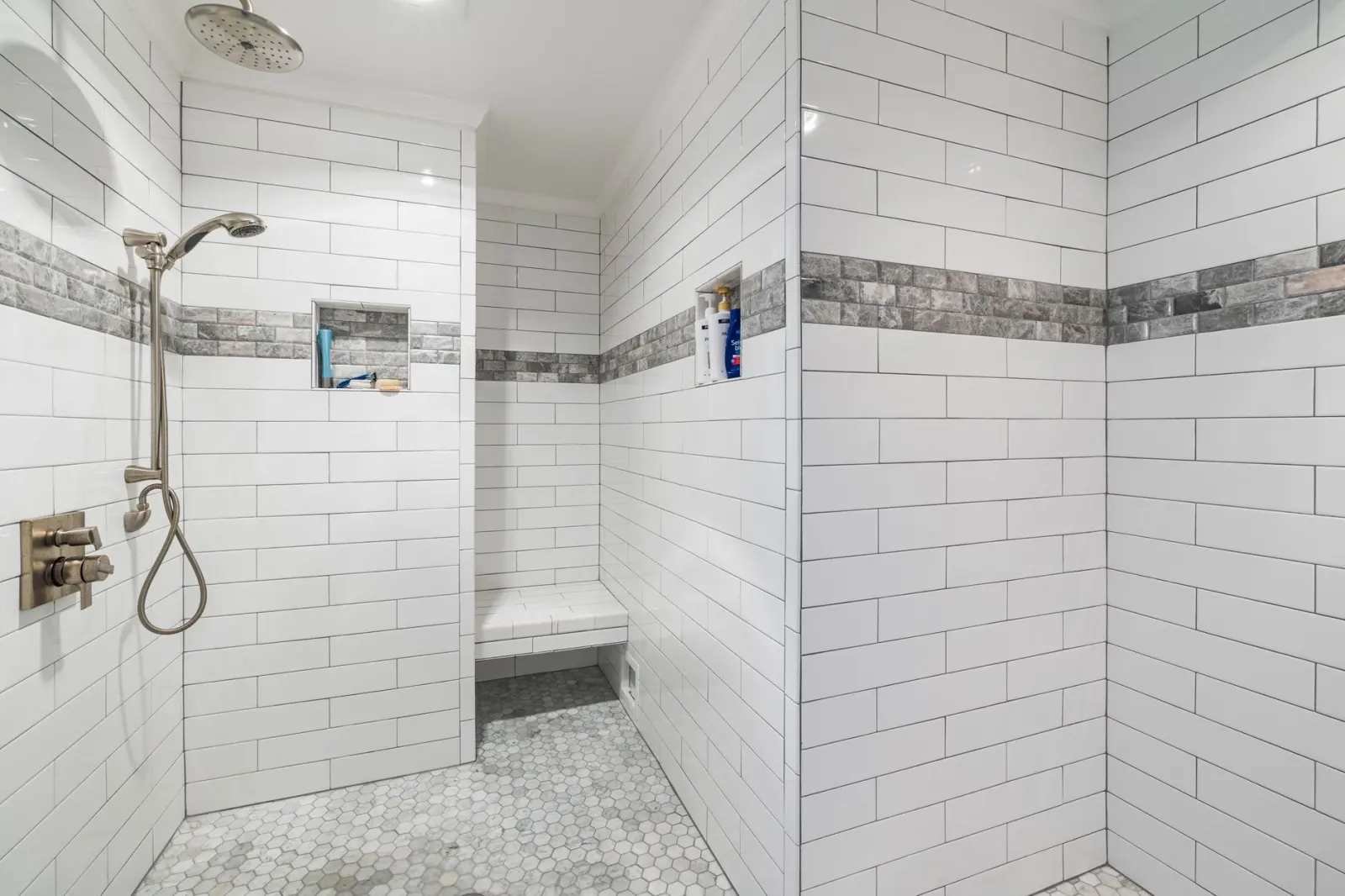
This is also where a walk-in shower has an advantage over trying to shoehorn a new tub into an old footprint: a walk-in design gives the installer room to correct framing, slope the floor properly toward the drain, and build in blocking exactly where you'll actually use a grab bar or a handheld sprayer, rather than working around a fixed tub shape.
Permits in Baltimore County
Towson falls under Baltimore County's permitting jurisdiction, and most straightforward tub-to-shower conversions that don't move plumbing lines or alter structural framing can often be done without a building permit — but any work that relocates a drain, adds new supply lines, or changes framing typically does require one. Requirements can shift, and only Baltimore County's permitting office can tell you definitively what your specific project needs. A contractor familiar with local jobs should be able to tell you upfront whether your scope of work is likely to trigger a permit and should handle that paperwork rather than leaving it to you.
What to ask before you commit
- Will you inspect behind the tub before finalizing the quote, or only after demo has started?
- What happens to the price if you find subfloor damage, old galvanized pipe, or missing blocking?
- Will grab bar blocking be included even if I don't want a grab bar installed right away?
- Who is responsible for pulling any required permit?
These are the same questions worth asking whether you're in a Towson colonial, an Ellicott City rowhome, or a newer build in Columbia — but they matter more in older housing stock where the walls are more likely to be hiding something. Getting clear answers before work starts is a better use of your time than getting a surprise once the tub is already out of the house.
Working with a local contractor who knows the housing stock
A crew that's worked on Baltimore County homes for years has usually already seen the plumbing quirks and framing shortcuts common to your neighborhood's construction era, and they plan for it instead of being surprised by it. That familiarity tends to show up in fewer change orders and a more accurate initial quote. Our process starts with an in-home visit for exactly this reason — measuring the space and looking at what's actually there, not guessing from a description over the phone.
Ready to find out what's really behind your tub? Schedule your free in-home consultation and get a straight answer about your bathroom before you commit to anything.